In short
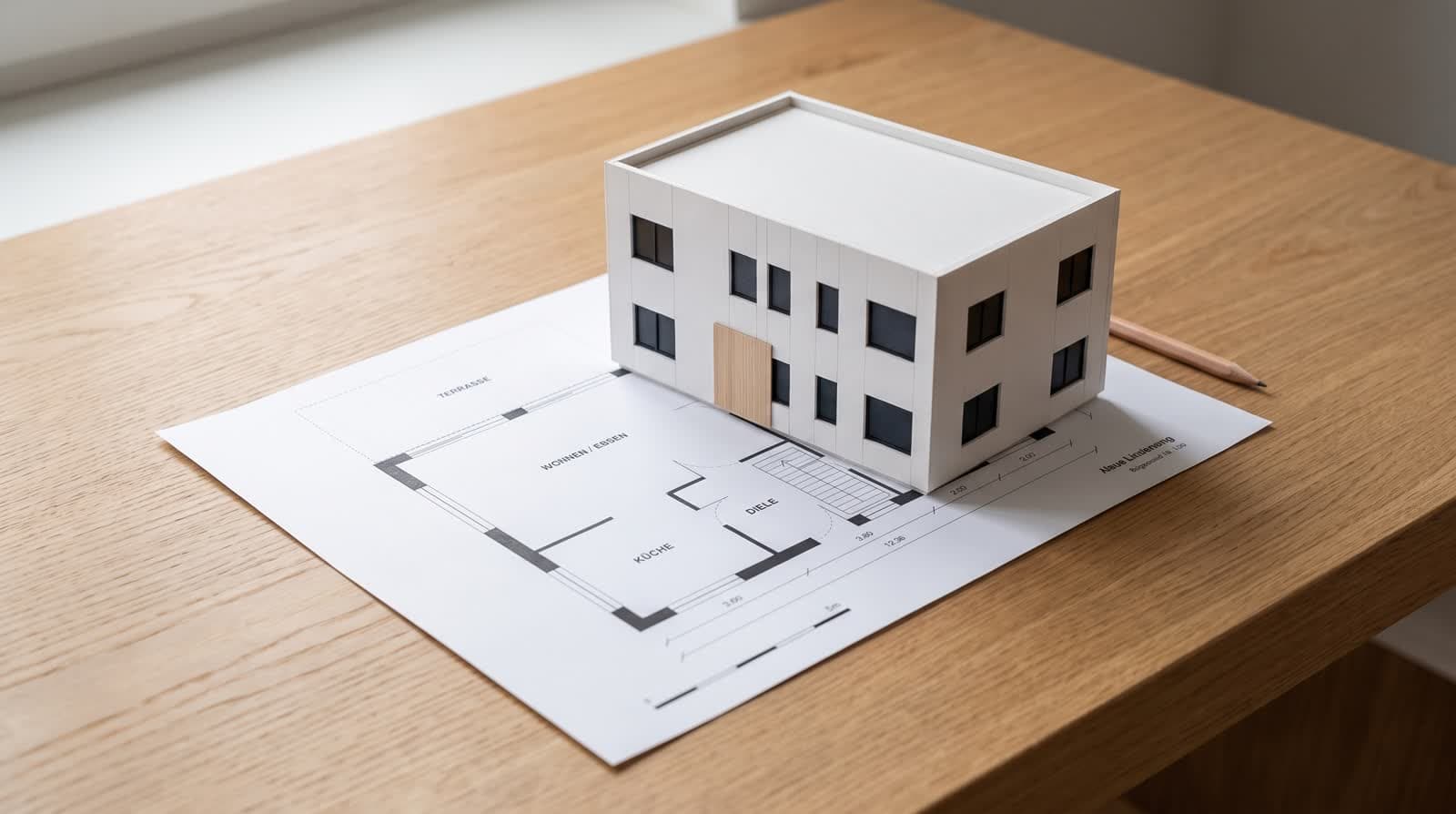
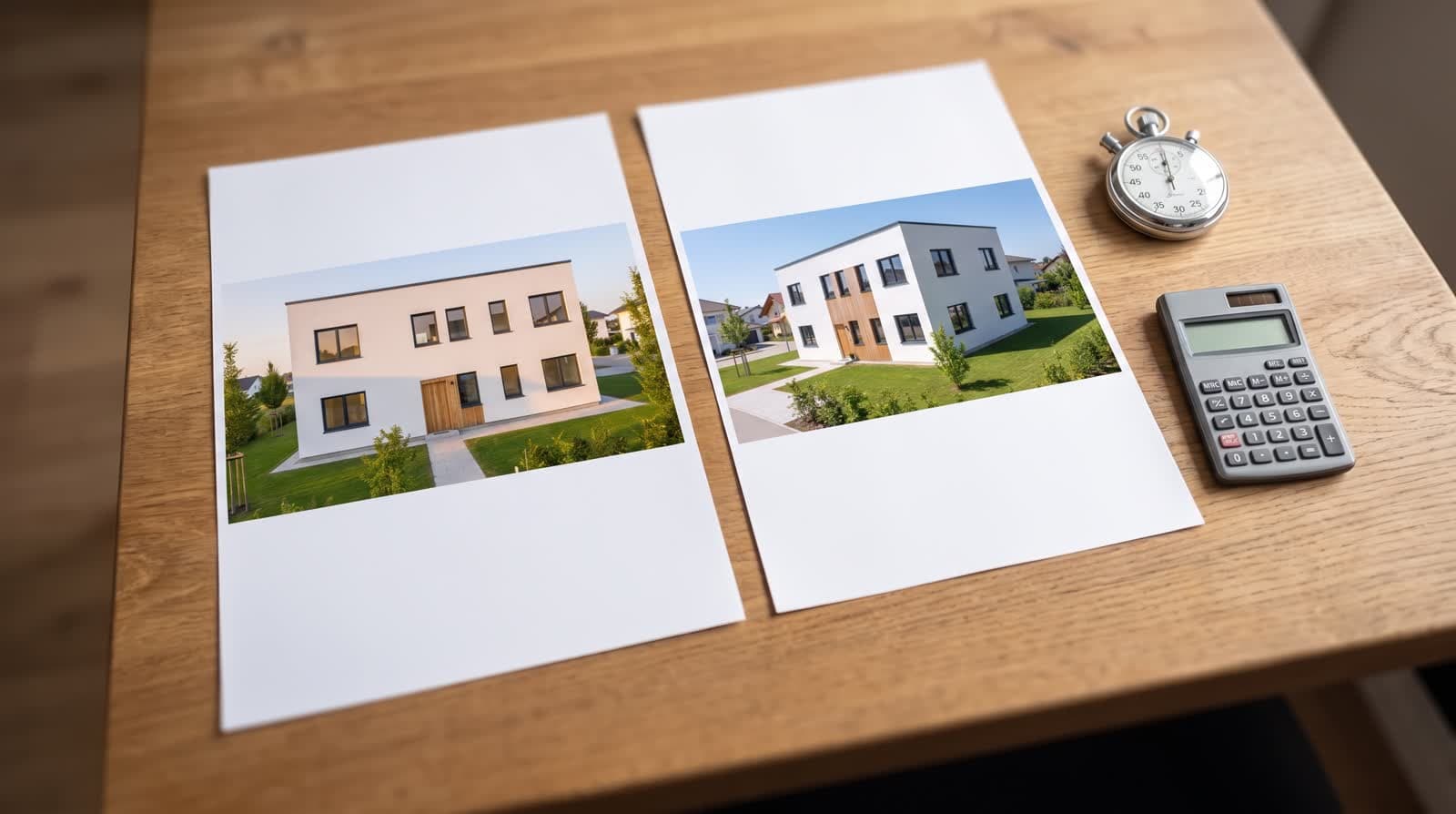
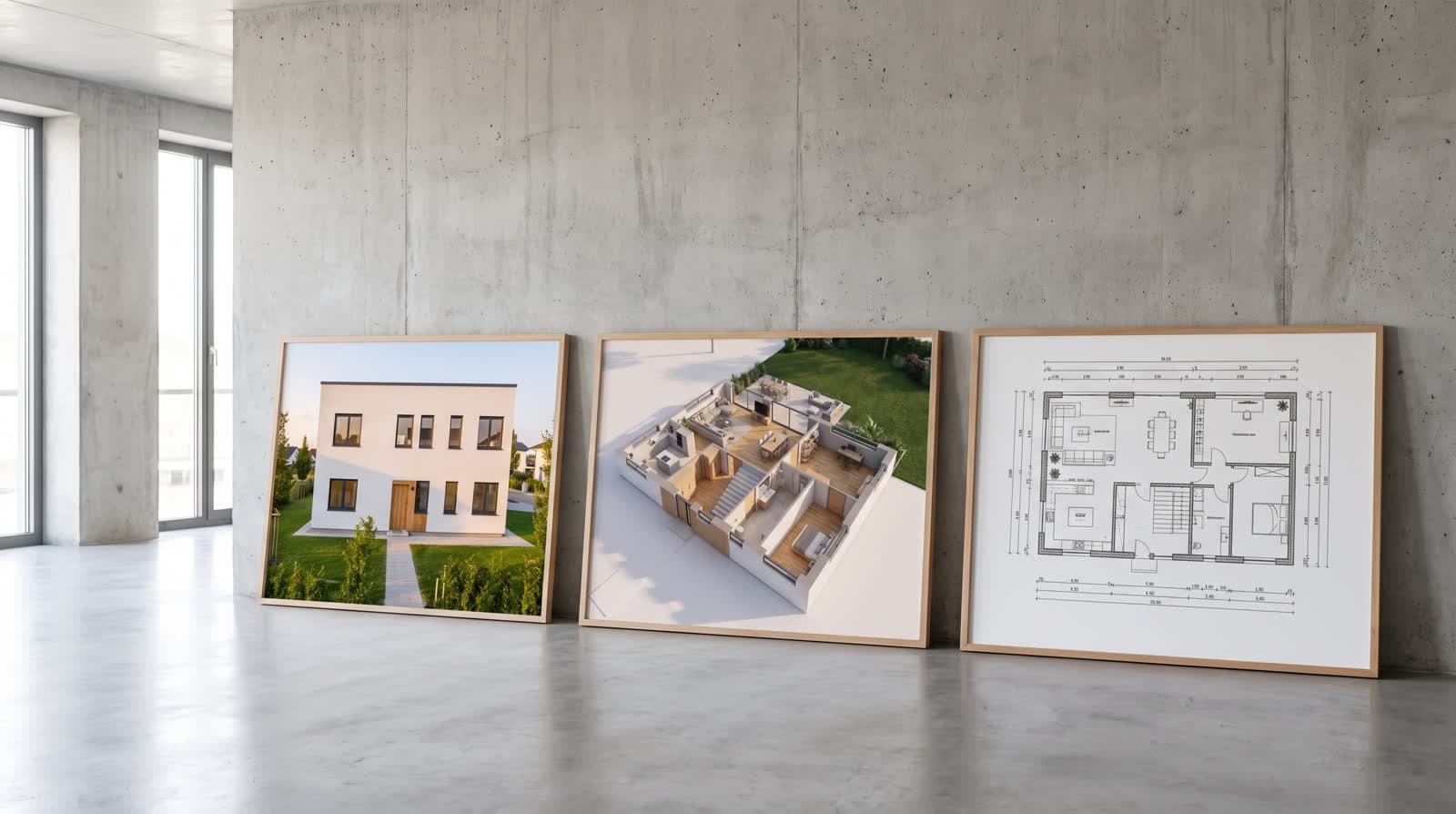
On a competition board three images carry: a view in the existing context that shows how the design fits, an eye-level perspective from the most important vantage point, and an interior or sectional perspective that explains the concept. For print, work at 150 dpi at final size; an A0 landscape board then needs about 7000 pixels of width. For the deadline, image changes must not trigger an external order.
What a jury does in the first round
The first round is about eliminating, not choosing. Boards hang side by side and are scanned within minutes. What cannot be read in that time does not exist.
So: one strong image per board, not five of equal weight; captions that name the vantage point; no collages of details. The competition brief prescribes scales and often vantage points, so read it before placing cameras.
The three images
Context view
The building with real neighbouring buildings, seen from the direction people arrive. It answers the question every jury asks first: does this belong here?
Eye level
The most important pedestrian perspective, usually from the main entrance or from public space. Focal length around 24 mm, camera at 1.60 m.
Concept
A sectional perspective or interior that shows the idea: light, circulation, relation to the open space.
Resolution and print
The arithmetic is simple: pixels = centimetres ÷ 2.54 × dpi. For A0 landscape at 150 dpi the width is 118.9 cm ÷ 2.54 × 150, about 7020 pixels, and the height 84.1 cm ÷ 2.54 × 150, about 4966 pixels.
An image covering half the board width therefore needs about 3500 pixels. Rendering in 4K (3840 pixels wide) covers that; 8K leaves reserve for full-bleed images.
Deadline pressure and files for submission
- 01Fix vantage points earlyPlace the cameras as soon as the volume stands, even if the facade is still open.
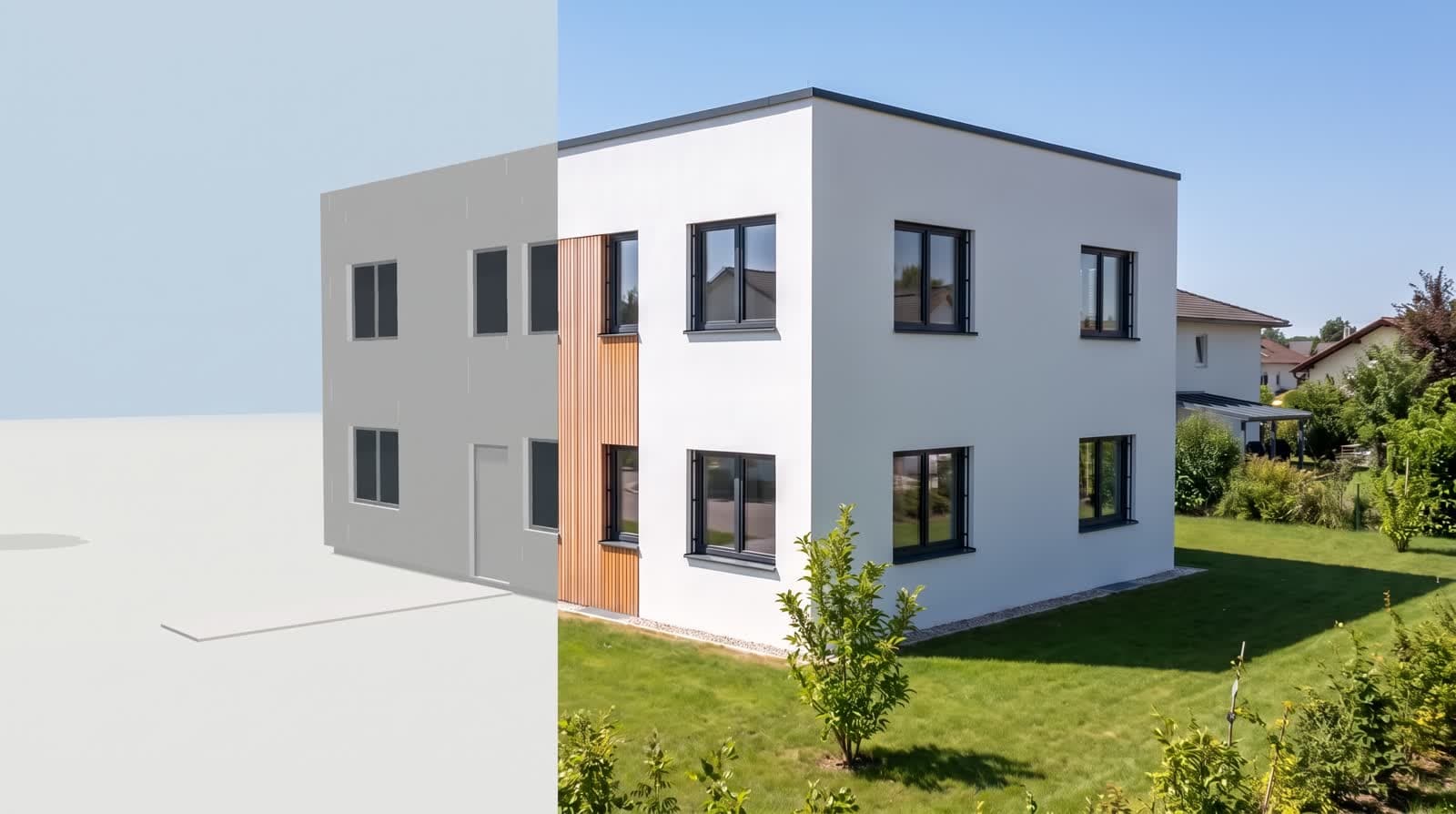
- 02Regenerate instead of retouchingWhen a facade change takes two minutes instead of two days, it gets done rather than left out of the image. For late variants see material variants material variants: same camera, other material, same board.
- 03Check colour spaceScreens are RGB, print is usually CMYK. Saturated blues and greens look duller in print, so test-print strong skies.
- 04Embed the imagesSubmit a PDF with embedded, not linked, images. Many procedures require PDF/X.
- 05Mind file sizeBriefs often set limits per board. 150 dpi instead of 300 dpi halves the file with no visible loss at viewing distance.
Order on the board and what the brief prescribes
The eye reads from top left. The image meant to convince the jury belongs there, not the site plan and not the title field. Technical drawings follow below, explanatory text at the edge. With three boards, repeat that order on each, so the layout reads even from three metres away.
Many procedures prescribe scales, number and format of boards, sometimes vantage points and even date and time for the sun position. These are exclusion criteria. Also check whether perspective views are admitted at all; some procedures explicitly ask for axonometric drawings. More on the process under competition visuals competition visuals.
Questions and answers
What resolution does an A0 board need?
At 150 dpi about 7020 × 4966 pixels for the whole board. A half-width image needs about 3500 pixels in width, which 4K covers.
How many images per board?
One dominant image plus two supporting ones. More is not read in the first scan.
Are AI-generated images allowed in competitions?
The brief decides. Some procedures ask for information on how images were made. State the origin if nothing else is prescribed (/en/ai-transparency).
Which sun position should I use?
If the brief prescribes nothing: early afternoon in June. Shadows then show depth without darkening the facade.